The Trust Map We Need
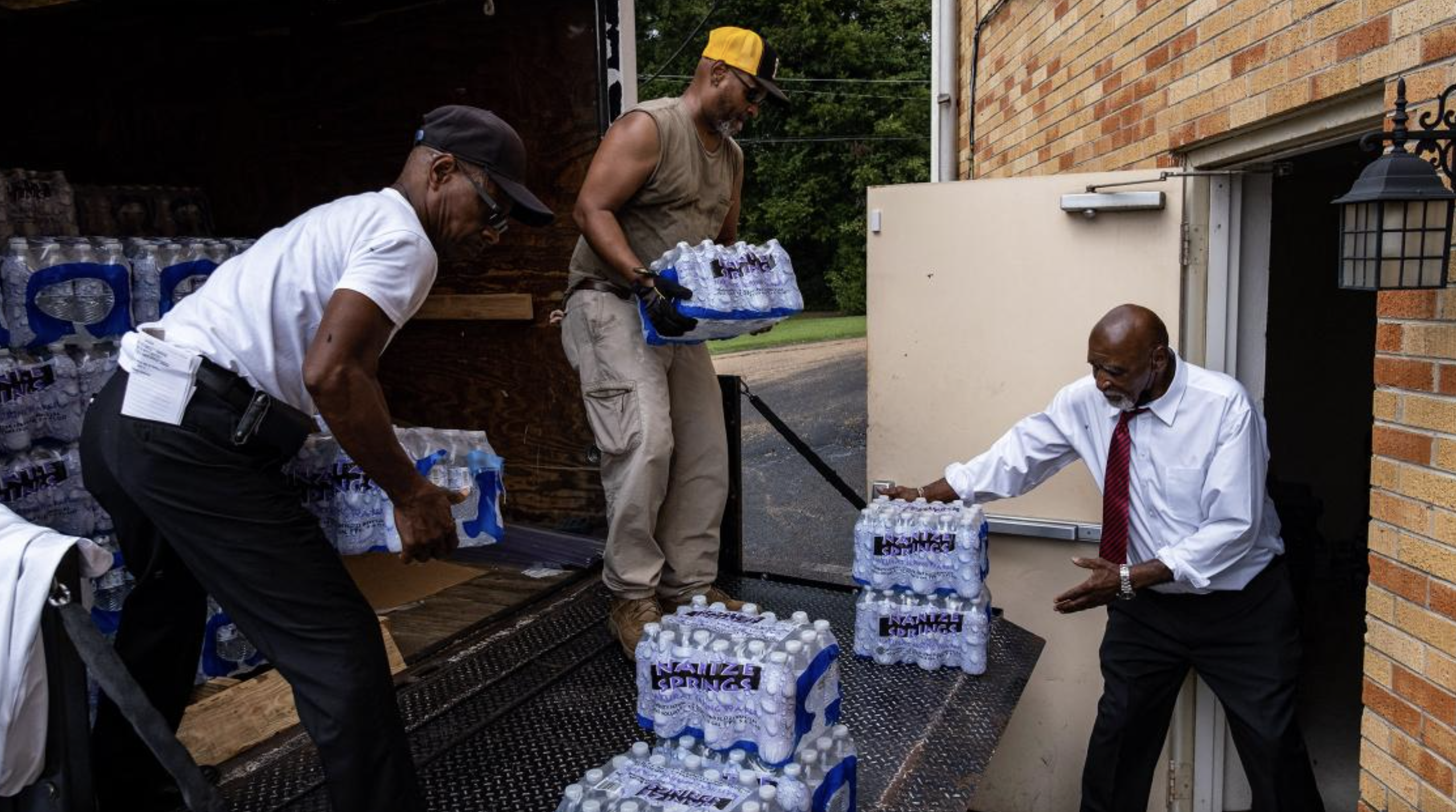
Image credit: Caribbean community mutual aid. Image licensed under Creative Commons Attribution–NonCommercial–ShareAlike (CC BY-NC-SA).
Why I am exploring NeedsMap Caribbean, starting with Jamaica
In many parts of the Caribbean, helping each other is not something people need to be told to do. It is already part of how communities live. Brother Jasper might pass over a hand of bananas, and later you return the favor with a bucket of fresh milk from your cow, Millie. Information travels quickly, needs are noticed just as quickly, and people are almost always ready to step in.
This is not a small thing. It is one of the ways people express care, build trust, and feel valued in their communities. That sense of connection shapes how resilient people feel when something goes wrong.
We have seen this at a much larger scale as well. In the immediate aftermath of Hurricane Melissa’s impact on Jamaica in October 2025, the diaspora mobilized quickly. People abroad sent money, organized supplies, checked in on family members, and worked through informal networks to get support to the ground. The instinct to respond was immediate and widespread. What varied was how easily that support could be directed, verified, and matched to the most urgent needs.
When roads are blocked, power is out, and communication is unreliable, people may still know that help is needed and still have no clear way to verify where it should go, who can move it, or how to connect those ready to help with those who urgently need support.
I have been thinking about that problem for a long time.
In 2012, as an Australia Awards scholar, I pitched my interest in disaster risk management many months after the earthquake in Haiti and a few years after Hurricane Ivan in Jamaica. Haiti’s earthquake in January 2010 had already shown how devastating a disaster can become when infrastructure, state capacity, and everyday coordination are all under strain. Hurricane Ivan in 2004 had left deep marks on Jamaica and on how many of us thought about risk, preparedness, and recovery. Of course natural disasters are about the hazard itself and the level of risk it creates. But they also depend on how well people are able to coordinate when those events occur.
Today, the Caribbean has more formal disaster risk financing tools than it once did. The Caribbean Catastrophe Risk Insurance Facility, established in 2007 and now CCRIF SPC, provides quick financial support after major disasters. What remains unresolved is local coordination among everyday people who are often quite capable of meeting one another’s needs, provided there is a trusted way to identify need, verify urgency, and route support.
That is the gap I keep coming back to.
Even with strong national and institutional response, communities can still struggle with the practical work of identifying need, confirming urgency, moving information, and making sure support reaches the people who need it most. Since care is already present in these communities, the focus now should be on building the structures that allow it to move where it is needed most.
How this project began
That concern is what I brought into the ICDE Fellowship.
When I spoke with Professor Trebor Scholz about this line of thinking, he immediately saw its relevance to the cooperative digital economy and connected me with people he thought would care deeply about it. He was right. He introduced me to the co-founders of Needs Map, Dr. Ali Özgur and Dr. Evren Aydoğan, and I am glad he did. Great minds do think alike.
The project I am now pursuing through the fellowship is NeedsMap Caribbean, with Jamaica as the intended first pilot context. The project asks a simple but important question: what would it take to adapt an already proven cooperative model of needs mapping and support coordination for Caribbean realities, especially for conditions where trust, local knowledge, diaspora support, and degraded communications all matter?
Why Needs Map matters
This does not start from zero.
Needs Map already has a demonstrated practical record. Needs Map Türkiye is a social cooperative that brings people in need together with individuals, institutions, and organizations that want to support. The organization has also expanded across multiple regions, including Europe and the UK, while continuing to frame its work around technology, community engagement, and practical social impact.
Its work in disaster settings is especially important to me.
After the October 2020 Izmir earthquake, Needs Map created a housing aid application through its One Rent One Home campaign. That application helped connect displaced residents to vacant homes, rent support, goods, and services, while the city verified ownership, inspected homes, and helped residents move in. This is the kind of practical coordination work that gets my attention because it is not speculative, it is demonstrable.
Needs Map’s later earthquake recovery work in Türkiye shows how this model extends beyond immediate response into longer-term recovery. The United Nations Development Programme (UNDP) reported in 2023 that it was supplying drinking water and wastewater treatment facilities for three container cities being constructed by Needs Map in Hatay, Adıyaman, and Kahramanmaraş after the devastating February earthquakes. More recent work, including projects such as the Spain Flood Map and other initiatives featured on its global site, reinforces this pattern. Taken together, these examples show a model that has already been implemented across multiple disaster contexts. That track record is what makes the possibility of collaboration compelling.
What I am trying to contribute
I will not pretend that I invented the need for this kind of platform. However, my contribution is to think carefully about what a Jamaica-first adaptation would require if it is going to become truly local, truly useful, and eventually transferable to Jamaican knowledge and capacity. That means focusing on the coordination layer itself.
I am especially interested in three things.
The first is trusted nodes. Every community already has people and institutions that others rely on when conditions get difficult. A church leader may know which families have not checked in. A nurse may know who depends on refrigerated medication. A shopkeeper may hear quickly which households are running low on food. A driver may know which roads are still usable. A teacher may know which families need extra support. These are not side details. They are often the practical anchors through which communities coordinate.
The second is verification. Not every request reaches the same people in the same way. Some are visible quickly. Some are not. Some are repeated widely. Some remain quiet. Coordination gets stronger when there is a trusted process for confirming what is urgent, what is credible, and what should move first.
The third is the link between diaspora and local support. Jamaica has a large and active diaspora. That is a major strength. Diaspora support already matters in family life, emergency life, and everyday survival. The question is how to connect that support to local trust networks and local verification in ways that are useful, accountable, and grounded in what communities actually need.
That is the design space I care about.
Why local grounding matters
In recent conversations with the co-founders of Needs Map, one theme became very clear: a Jamaica-focused effort would need enough early support to become genuinely local. That means thinking seriously about seed funding, partnership structure, roles, responsibilities, and what it would take for the work to become rooted in Jamaican knowledge and capacity over time. I take that seriously. A platform can do useful work in an emergency and still fail as an institution if it never becomes truly grounded in the community it is meant to serve.
I do not want to simply bring a platform to Jamaica. That conviction is shaped in part by my years working as an economist at the Planning Institute of Jamaica and the Ministry of Tourism between 2013 and 2016. I was part of a broader national effort shaped by Vision 2030 Jamaica, with its ambition to make Jamaica the place of choice to live, work, raise families, and do business. That experience stayed with me. It reinforced my belief that development cannot remain only a top-down project. People need practical power in their own communities, and that includes coordination systems that help them verify need, act on trusted local knowledge, and support one another more effectively under pressure. Living in countries such as Japan and Australia deepened that conviction. I saw what it looks like when disaster preparedness is treated seriously, when coordination is not left to chance, and when people are supported by systems that make collective action easier. Those experiences sharpened my belief that Jamaica does not need to copy another society’s model, but it can invest more deliberately in the coordination infrastructure that helps communities act on the care, trust, and local knowledge they already have. I want to think through how a model like Needs Map can be adapted in a way that respects Jamaican institutions, relationships, realities, and knowledge, and how it can eventually be carried by local capacity rather than remaining dependent on outside stewardship.
What network science adds
This is one reason network science is so useful to me here.
My broader research has always been about structure. I study how networks shape communication, behavior, and collective outcomes. I pay attention to what becomes visible, what gets ignored, how trust moves, and where action stalls. In disaster settings, those same questions become more immediate. They affect food, medicine, transportation, safety, and recovery.
A network lens brings the practical problem into focus: who hears urgent needs first, who verifies them, how people and groups are connected, where pressure concentrates, and which households are reached or missed. It also makes clear what continues to work when power is unstable, internet access is weak, or formal systems are slow. These are coordination questions in their most practical form.
This is where I think NeedsMap Caribbean can make a useful contribution. I am interested in a platform that makes the coordination layer more visible and more usable. That includes trusted local nodes, pathways for verification, and structured ways to connect need with support across both local and diaspora channels. It also includes offline readiness. A platform that only works when connectivity is stable is not enough for the conditions I care about. Many communities need systems that remain useful under degraded connectivity, fragmented information, and uneven institutional response.
Why Jamaica, and why now
That is one reason the Caribbean is such an important setting for this work.
The region lives with storms, floods, infrastructure stress, and the uneven pace of formal response. Jamaica is an especially compelling place to begin because it combines strong community ties with a diaspora estimated at about 3 million people, slightly larger than the island’s resident population of roughly 2.8 million, and a real need for systems that can make coordination more transparent and more dependable. A Jamaica-first pilot would let us ask how a platform model with a proven track record elsewhere can be rethought through Caribbean realities instead of being copied mechanically. That matters for design. It matters for governance. It matters for long-term credibility.
Why this belongs in the cooperative digital economy
I also think it matters for the cooperative digital economy more broadly.
A great deal of discussion around platform cooperatives centers on ownership, governance, and alternatives to extractive technology. I care deeply about those questions. I also want to push them into a very practical setting. What does democratic digital infrastructure look like when it is part of how a community gets food, medicine, information, transport, and safety during a crisis? What does accountability look like when a mistake goes beyond a bad user experience to include a delayed response to a family in need? What does fairness look like when some requests move quickly because the people making them are more visible or better connected?
These questions carry real consequences for how we distribute support, whose needs we prioritize, and whose requests we overlook. They also show what cooperation actually requires under pressure.
A project like this requires relationships, legitimacy, governance, and enough runway to become truly rooted. It requires careful thinking about who has authority, how needs are verified, how errors are corrected, and how a platform supports rather than distorts the local coordination already taking place. It also requires humility. Communities already know a great deal about how they survive. A useful platform should help make that knowledge more legible and more usable, not push it aside.
Where I would welcome support
I would welcome dialogue with people who understand Jamaica and the wider Caribbean deeply, especially those working in disaster preparedness, community organizing, public health, logistics, communications, local governance, and faith-based or civic institutions.
I would welcome examples from others who have tried to build or study systems for local coordination, need verification, or diaspora-supported response.
I would welcome conversation with technologists and cooperative builders who have thought seriously about offline readiness, community governance, and digital systems designed for trust rather than extraction.
I would also welcome people who can help think through the partnership and sustainability side of this work, including the early funding and operating questions that determine whether a project becomes locally grounded or remains temporary.
What I hope to advance
What I am trying to build through this fellowship is a framework for how an already proven model can be adapted for a Jamaica-first context with the right attention to trust, verification, local capacity, and diaspora-local coordination.
The deeper point is simple.
Disasters expose both weak infrastructure and weak coordination. They show how much communities already know and how difficult it can be to turn that knowledge into collective action under pressure. They also highlight the gap between having resources somewhere in the system and having a trusted path for those resources to move.That is the problem I have cared about since 2012. It is the problem I am glad Professor Trebor Scholz recognized. And it is the problem I now hope to push further through NeedsMap Caribbean, beginning with Jamaica.
About the author:
Shaunette Ferguson is a Postdoctoral Research Fellow at Barnard College, Columbia University in New York City.