Format: Reverse Panel 4
Moderator: Hal Plotkin
Speakers: Waranya Buranakarn, Janjira Sombatpoonsiri, Phakin Nimmannorrawong, Ganesh Gopal
This panel sits at the threshold between critique and change, asking whether challenges to AI’s ideologies and interpretive blind spots can reshape how technology is governed—or whether institutions simply absorb that critique and carry on as before.
Waranya Buranakarn compares three LLMs (GPT-4o, SEA-LION v4, and Typhoon 2.5) on the same corpus of Thai military Facebook posts from the 2025–2026 Thailand-Cambodia border conflict. She finds that the models diverge most where interpretation requires situated cultural knowledge of language and political practice. This raises the question of whose interpretive categories count when LLMs read political speech in low-resource languages. She links this to Solidarity AI by extending accountability to interpretation, proposing inter-model divergence as a diagnostic that flags where situated knowledge should lead, since even locally or regionally trained models can reproduce blind spots around politically sensitive meanings.
Janjira Sombatpoonsiri dissects the ideologies underpinning techno-authoritarianism, from Accelerationism and Transhumanism to Neo-monarchism. She examines the policy influence that AI oligarchs who endorse these ideas exert on liberal democracy today, and invites participants to brainstorm an ideological basis that can unite progressive constituencies to counter techno-authoritarianism. She argues that today’s AI infrastructure cannot be separated from the ideologies of the tech oligarchs who build it, and that understanding those ideologies is essential to uniting, pushing back, and reimagining democratic AI.
Phakin Nimmannorrawong draws on his fieldwork with Bread Cooperative, a worker-owned crypto cooperative, to ask what makes a blockchain-based cooperative “real” beyond its technical architecture. He examines Bread as a mutualistic organization, focusing on its solidarity mechanisms and on the relationship between its social and technical layers: how cooperative infrastructures can sustain reciprocity, collective value, and care rather than merely reproduce the economic relationships of conventional digital platforms.
Ganesh Gopal brings lessons from Kerala’s efforts to build public and cooperative alternatives in the digital economy. Drawing in particular on Kerala Savaari, a state-supported alternative ride-hailing initiative, he examines how public support can enable cooperative digital infrastructure while also creating risks of bureaucratic centralization, infrastructural dependence, and weak worker governance. His broader work asks how Kerala’s unusually dense cooperative ecosystem can be digitally enabled through member-owned platforms, shared infrastructure, and collectively governed data rather than simply creating new investor-owned intermediaries. This perspective is grounded in Ganesh’s practice across the state, cooperative, and civic-tech spaces: he co-founded TinkerHub Foundation, Kerala’s largest tech-skilling community, and served as a working group expert on cooperatives for the Kerala State Planning Board’s Five-Year Plan. Beyond Kerala, he advises UNDP and Fiji’s Ministry of Commerce and Business Development (MCBD) on drafting Fiji’s National Cooperation Policy.
Reporter 1: Hal Plotkin
Reporter 2:
Speakers
-

Hal Plotkin Senior Scholar at the Institute for the Study of Knowledge Management in Education
-

Janjira Sombatpoonsiri Political scientist at Chulalongkorn University
-
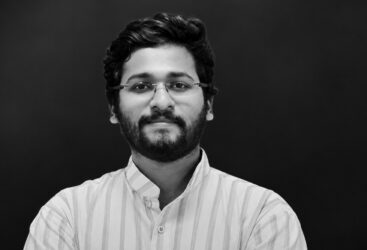
Ganesh Gopal Ph.D. student, Gandhigram Rural Institute
-

Waranya Buranakarn PhD student in Communication at The Chinese University of Hong Kong
-

Phakin Nimmannorrawong Researcher, policy analyst, PhD student at University of Cambridge