Too Many Islands, Too Little Coordination for Small Farmers in Indonesia’s Digital Food System
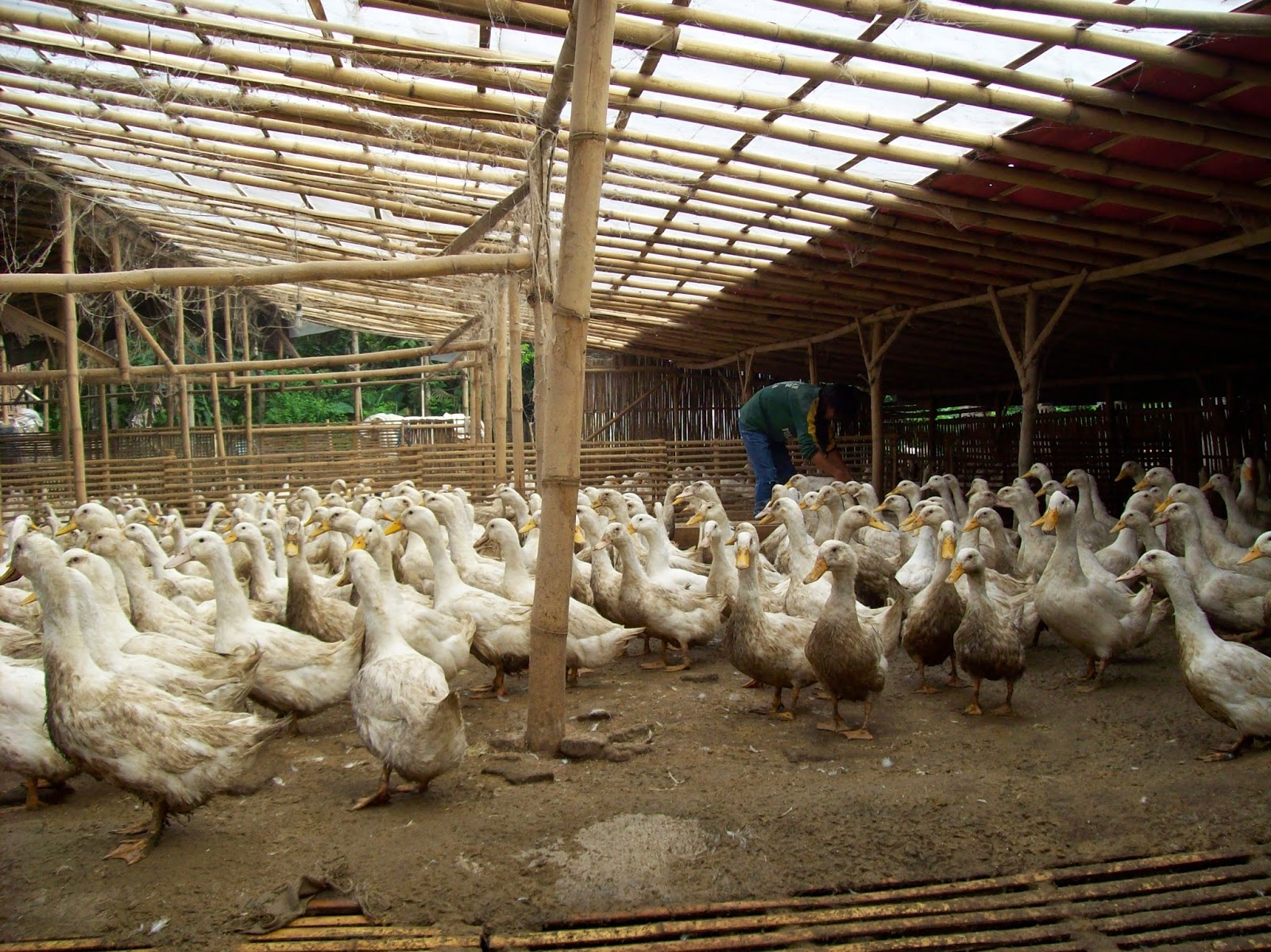
Masputra’s essay argues that Indonesia’s fragmented smallholder food system requires cooperative digital infrastructure and trust-based coordination, built through local experimentation rather than technology alone.
—————————————————————————————————————————–
Food now moves quickly through complex supply chains, while the farmers who grow it often remain fragmented and poorly coordinated. Tomatoes, rice, chilies, eggs, and livestock travel across regions and islands, passing through traders, markets, processors, and logistics systems before reaching consumers. Yet the farmers at the beginning of that chain often remain poorly connected to one another, weak in bargaining power, and far removed from the decisions that shape how value is created and distributed. Consumers, meanwhile, encounter food mostly as a finished product, with little sense of the labor, landscapes, and relationships that made it possible.
This tension sits at the center of my work as an ICDE Fellow. I am interested in what happens at the intersection of cooperative organization, small-scale farming, and digital infrastructure, and whether these can be brought together in ways that are actually useful in practice. Aqsa Farm and aqsafarmer grew out of that inquiry. They are not finished models or polished solutions, but ongoing experiments rooted in a very specific place: Indonesia.
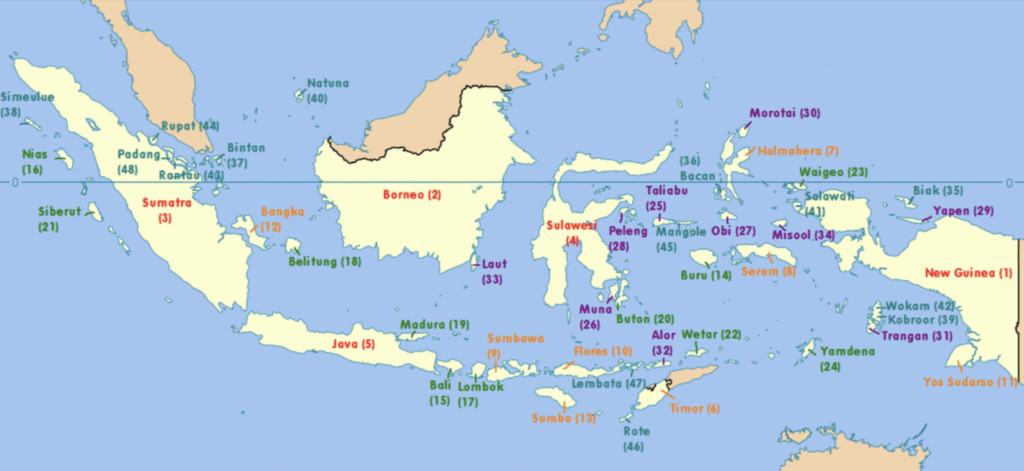
Indonesia makes these tensions difficult to ignore. Spread across more than 17,000 islands, the country’s food system depends on millions of small-scale producers working under fragmented conditions, with uneven access to markets, infrastructure, training, and support. Geography intensifies this fragmentation. Production is dispersed across thousands of islands, each with different levels of connectivity, logistics, and institutional capacity. In that setting, informal intermediaries often become indispensable. They link farmers to markets and help move goods across difficult terrain. But they can also deepen dependency, leaving producers with little collective leverage and limited influence over the terms on which exchange takes place.
When people talk about food security in places like this, the conversation often swings between two familiar poles. On one side are large-scale industrial systems, praised for efficiency, speed, and scale. On the other are localized models, valued for resilience, autonomy, and self-sufficiency. What often disappears in this debate is the institutional layer in between: the forms of coordination that connect small-scale production to systems of distribution, shared knowledge, and governance.
That is where my central question begins: what can cooperative digital infrastructure realistically do for fragmented local food systems, and where does it run up against its limits?
Fragmentation in food systems is not just a problem of size. It is a problem of coordination. Small producers often work in parallel rather than together. They may face the same pressures, limited capital, unstable demand, rising input costs, and environmental risk, yet still lack reliable ways to coordinate production, share knowledge, or plan collectively. Each farm ends up navigating these pressures alone, even when acting together might improve their position.
In that kind of landscape, intermediaries become indispensable. Many Indonesian smallholders farm on plots of less than one hectare, making it difficult to aggregate supply independently. Intermediaries therefore collect products, connect farmers to markets, and absorb part of the logistical uncertainty. But they also gain significant power in the process. They often shape prices, control access to buyers, and determine how goods move through distribution channels. For producers, this can create a fragile form of stability: the system functions, but largely on terms they do not control.
The effects of fragmentation do not stop with producers. Consumers sit at the far end of long supply chains, increasingly removed from the conditions under which food is grown, handled, and exchanged. Questions of quality, fairness, and sustainability reach them only after passing through multiple layers of mediation. The link between production and consumption becomes thinner, more abstract, and harder to trace.
So the problem is not simply that local food systems need to produce more. It is that they often lack the structures needed to coordinate, negotiate, and act collectively.
Attempts to strengthen local food systems repeatedly encounter the same obstacle: coordination is hard. And it is hard not only for technical reasons, but because the underlying institutions and relationships are often weak, uneven, or fragile.
Shared infrastructure is one part of the problem. In many rural areas, transportation is unreliable, storage is limited, and processing facilities are scarce. This contributes to post-harvest losses in perishable crops and reduces farmers’ bargaining power.
Knowledge is uneven too. Some producers gain access to better practices, tools, or training, while others remain cut off from those resources. This creates imbalances within local systems, where some actors are better positioned to adapt than others.
Trust sits underneath all of this. Collective coordination depends on people believing that participation is worthwhile, that others will follow through, and that shared arrangements will not simply benefit a few at the expense of everyone else. In fragmented environments, that kind of trust is difficult to build and even harder to maintain. Geography adds another layer of difficulty, as producers are often spread across different places, working under different local conditions.
Digital tools are often presented as the answer. Platforms promise to connect dispersed actors, make information easier to share, and create new possibilities for coordination. In principle, they can do all of that. In practice, the picture is much less clear. Do digital systems actually reduce dependency, or do they shift it into new forms? What kinds of governance are needed to ensure coordination tools remain collectively useful? What happens when differences in digital literacy shape participation?
These questions point to a deeper issue. Coordination does not emerge from tools alone. It depends on a set of underlying conditions: shared infrastructure, accessible knowledge, trust between participants, and governance arrangements perceived as fair. Without these, attempts at coordination remain fragile. Digital systems can assist, but they cannot substitute for these foundations.
What I Will Work on During the Fellowship
Over the coming year, this fellowship will focus on exploring how these conditions for coordination can be developed in practice. Rather than implementing a fixed model, the work will involve small experiments that test how shared knowledge, trust, governance, and cooperative organization can emerge under real constraints.
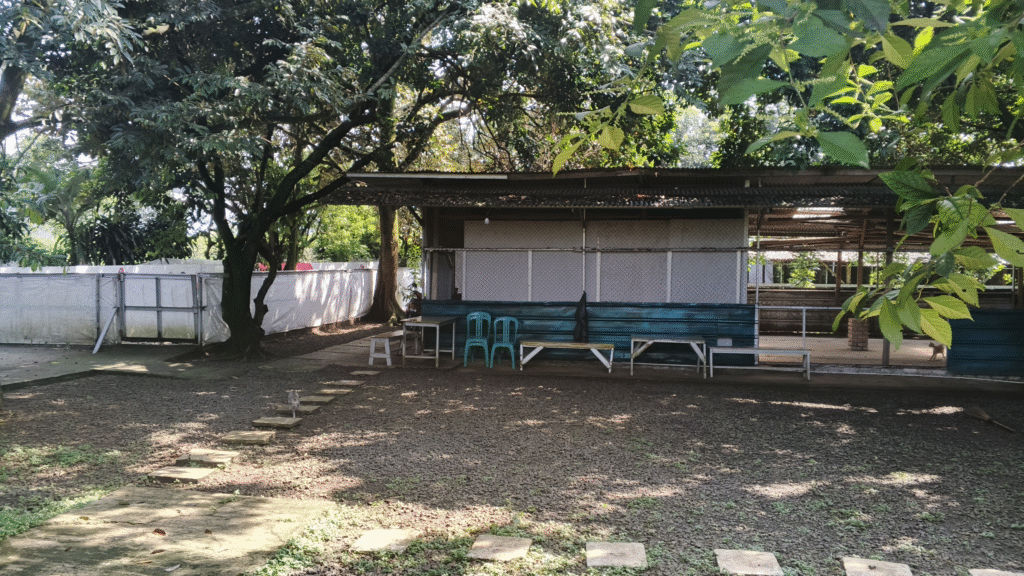
Aqsa Farm will serve as a field site for this experimentation. Based in Indonesia, the farm combines small-scale crop production, livestock, and community-based learning. It will function as a place where different ways of producing, cooperating, and learning can be tested under real conditions. Participation, decision-making, and resource sharing will be worked out gradually. The aim is not to produce a finished model, but to observe how the foundations of coordination can take shape.
In parallel, aqsafarmer will be developed as a second layer of coordination. Early work will focus on producing simple learning content for small-scale farmers, including basic farm setup, feeding practices, and small-scale processing. These materials are intended to create shared reference points that reduce isolation.
Small coordination experiments between microfarms will form another strand of the work. These may include aligning supply, testing shared processing, and exploring collective distribution. Such experiments will operate at limited scale because coordination depends on trust as much as technology. Alongside this, the project will aim to build an early network of participants interested in cooperative food systems.
Aqsa as a Working Framework
These practical experiments also shape how normative ideas enter the project. Concepts such as halal, waqf, Islamic social finance, and Islamic economic ideas will be introduced only where they help explain how stewardship, coordination, or resource sharing work in practice.
The name Aqsa reflects this layered approach. It began as a symbolic anchor connected to Muslim community-centered solidarity. Over time, it evolved into a working framework. The first A refers to Allah first, placing spiritual and ethical grounding before optimization. Q refers to quality and continuous improvement. S reflects sustainable development and long-term stewardship. The final A emphasizes agrifood cooperation and collaboration. Together, these elements describe not only values, but the conditions under which cooperation can take root.
The aim of this fellowship period is not to produce a finished platform, but to explore how coordination can emerge under fragmented conditions. Through learning content, small coordination experiments, and the gradual formation of a cooperative network, the work will focus on building the conditions that make coordination possible. Whether these approaches contribute to more equitable food systems remains uncertain. What seems clearer is that coordination depends not only on infrastructure or technology, but on the conditions that allow cooperation to emerge and endure.
About the author:
Iryandi (Dimas) Masputra is the founder at Aqsa Farm and a DBA student. Sentul, Babakan Madang, West Java, Indonesia