Too Many Islands, Too Little Coordination for Small Farmers in Indonesia’s Digital Food System
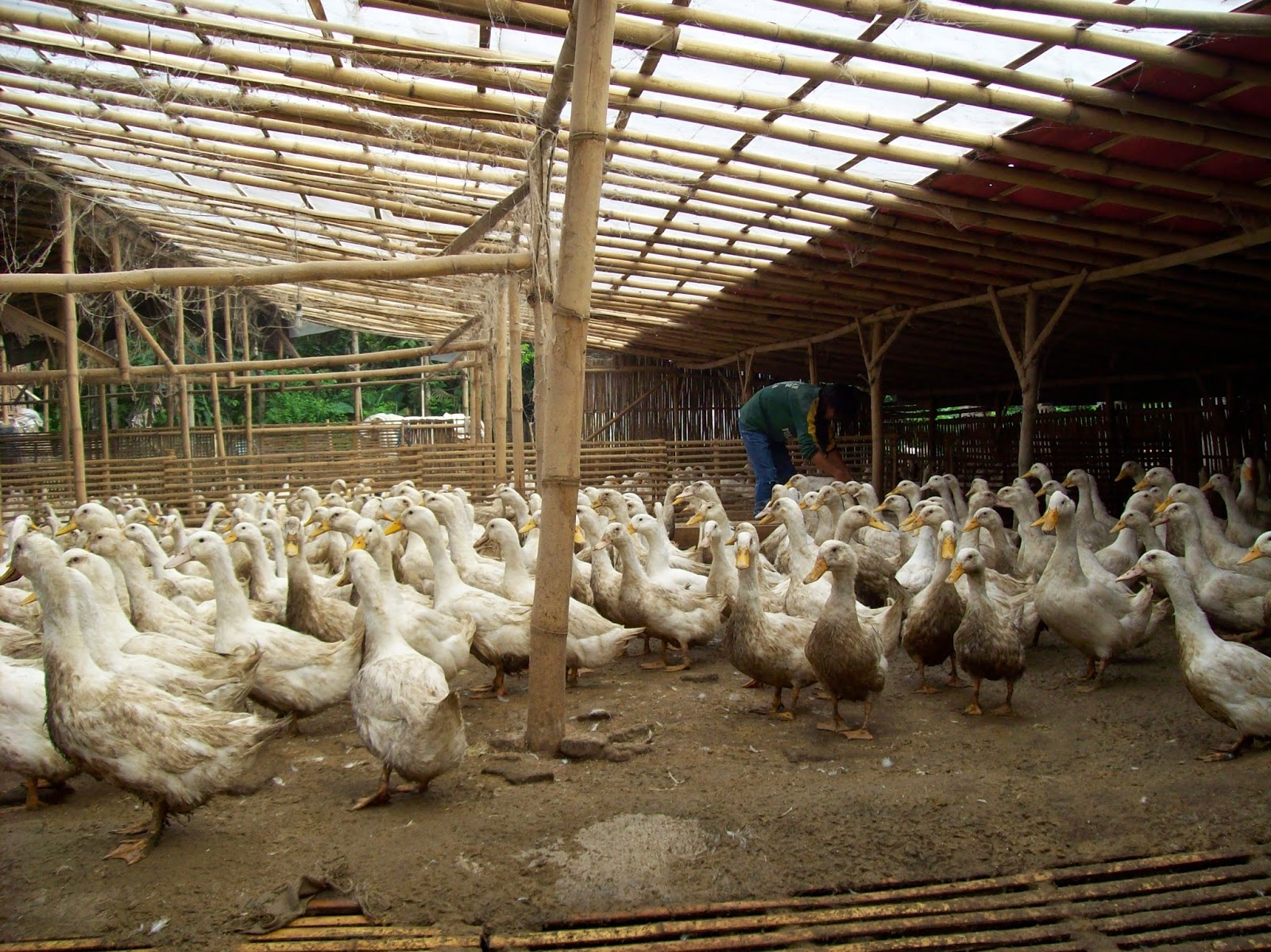
Food now travels faster than the people who grow it can organize around it. Tomatoes, rice, chilies, eggs, and livestock move through long and increasingly complex supply chains, crossing regions and islands, passing through traders, markets, processors, and logistics systems before they ever reach the people who eat them.
Yet the farmers at the beginning of that chain often remain poorly connected to one another, weak in bargaining power, and far removed from the decisions that shape how value is created and distributed. Consumers, meanwhile, encounter food mostly as a finished product, with little sense of the labor, landscapes, and relationships that made it possible.
This tension sits at the center of my work as an ICDE Fellow. I am interested in what happens at the intersection of cooperative organization, small-scale farming, and digital infrastructure, and in whether these can be brought together in ways that are actually useful in practice. Aqsa Farm and aqsafarmer grew out of that inquiry. They are not finished models or polished solutions, but ongoing experiments rooted in a very specific place: Indonesia.
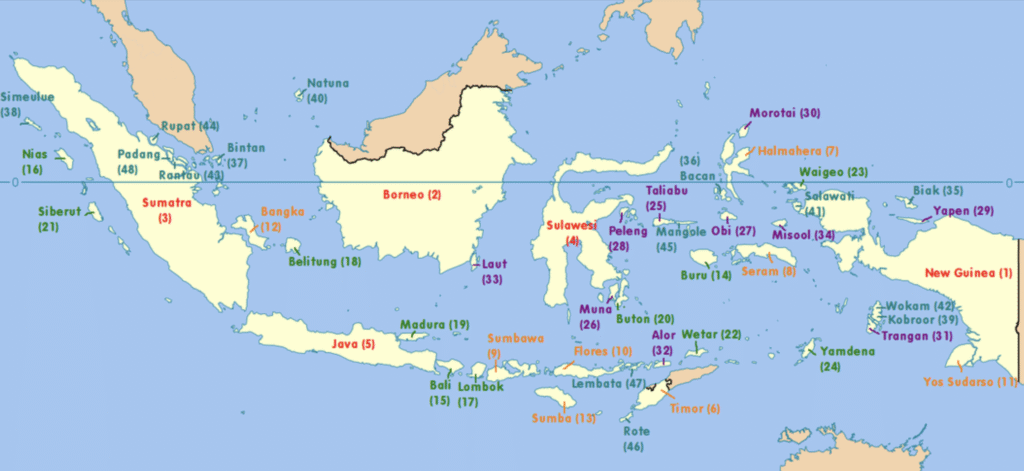
Indonesia makes these tensions impossible to ignore. Spread across more than 17,000 islands, the country’s food system depends heavily on millions of small-scale producers working under fragmented conditions, with uneven access to markets, infrastructure, training, and support. Small-scale producers work under fragmented conditions, with uneven access to markets, infrastructure, training, and support. Geography intensifies all of this. Production is spread across thousands of islands, each with different levels of connectivity, logistics, and institutional capacity. In that setting, informal intermediaries often become indispensable. They link farmers to markets and help move goods across difficult terrain. But they can also deepen dependency, leaving producers with little collective leverage and little influence over the terms on which exchange takes place.
When people talk about food security in places like this, the conversation often swings between two familiar poles. On one side are large-scale industrial systems, praised for efficiency, speed, and scale. On the other are localized models, valued for resilience, autonomy, and self-sufficiency. What often disappears in this debate is the institutional layer in between: the forms of coordination that connect small-scale production to systems of distribution, shared knowledge, and governance.
That is where my central question begins: what can cooperative digital infrastructure realistically do for fragmented local food systems, and where does it run up against its limits?
The Problem with Fragmentation
Fragmentation in food systems is not just a problem of size. It is a problem of coordination.
Small producers often work in parallel rather than together. They may face the same pressures — limited capital, unstable demand, rising input costs, and environmental risk — yet still lack reliable ways to coordinate production, share knowledge, or plan collectively. Each farm or producer ends up navigating these pressures alone, even when acting together might improve their position.
In that kind of landscape, intermediaries become indispensable. Many Indonesian smallholders farm on plots of less than one hectare, making it difficult to aggregate supply independently. Intermediaries therefore collect products, connect farmers to markets, and absorb part of the logistical uncertainty. They collect products, connect farmers to markets, and absorb part of the logistical uncertainty. But they also gain significant power in the process. They often shape prices, control access to buyers, and determine how goods move through distribution channels. For producers, this can create a fragile form of stability: the system functions, but largely on terms they do not control.
The effects of fragmentation do not stop with producers. Consumers sit at the far end of long supply chains, increasingly removed from the conditions under which food is grown, handled, and exchanged. Questions of quality, fairness, and sustainability reach them only after passing through multiple layers of mediation. The link between production and consumption becomes thinner, more abstract, and harder to trace.
So the problem is not simply that local food systems need to produce more. It is that they often lack the structures needed to coordinate, negotiate, and act collectively.
Why Local Food Systems Struggle to Coordinate
Attempts to strengthen local food systems often run into the same problem: coordination is hard. And it is hard not only for technical reasons, but because the underlying institutions and relationships are often weak, uneven, or fragile.
Shared infrastructure is one part of the problem. In many rural areas, transportation is unreliable, storage is limited, and processing facilities are scarce, contributing to significant post-harvest losses in perishable crops and reducing farmers’ bargaining power.
Knowledge is uneven too. Some producers gain access to better practices, tools, or training, while others remain cut off from those resources. This creates new imbalances within local systems themselves, where some actors are better positioned to adapt than others.
Trust sits underneath all of this. Collective coordination depends on people believing that participation is worthwhile, that others will follow through, and that shared arrangements will not simply benefit a few at the expense of everyone else. In fragmented environments, that kind of trust is difficult to build and even harder to maintain. Geography adds another layer of difficulty, as producers are often spread across different places, working under very different local conditions.
This is where digital tools are often presented as the answer. Platforms promise to connect dispersed actors, make information easier to share, and create new possibilities for coordination. In principle, they can do all of that. In practice, the picture is much less clear.
Do digital systems actually reduce dependency, or do they just shift it into new forms? What kinds of governance are needed to make sure coordination tools remain collectively useful rather than privately controlled? And what happens when differences in digital literacy shape who can participate, and who gets left behind?
These are the questions that matter. They suggest that digital infrastructure should not be treated as a neutral fix, but as something that can reorganize existing relationships, sometimes in helpful ways, and sometimes in ways that deepen the very problems it claims to solve.
Aqsa Farm as a Field Experiment
Aqsa Farm takes shape within this landscape not as a finished model, but as a living site of experimentation.
Based in Indonesia, the farm brings together small-scale crop production, livestock, and community-based learning in one setting. What interests me about it is precisely this combination. It holds together things that are often separated in practice and in policy: growing food, sharing knowledge, and testing new forms of organization.
Rather than offering a polished solution, Aqsa Farm functions as a prototype. It is a place where different ways of producing, cooperating, and learning can be tried under real conditions, with all the friction and unpredictability that real conditions involve.
On the production side, the farm works with integrated small-scale systems that combine crops and livestock. I do not approach these systems as automatically efficient or easily scalable. What matters is what they reveal: how different parts of the farm interact, how labor gets organized, and how outputs are shared and distributed.
On the organizational side, Aqsa Farm becomes a practical encounter with cooperative structure. Participation, decision-making, and resource sharing are not fixed ideals; they are ongoing processes that have to be worked out over time. That makes the farm a useful place to observe what cooperative arrangements actually look like when trust is uneven, incentives do not always align, and capacities vary from one participant to another.
The farm is also a learning environment. People engage not only with farming techniques, but with broader questions about how a system is designed, how knowledge travels, and what gets retained or adapted in small-scale settings.
In that sense, Aqsa Farm is less a model to be copied than a place where the conditions for possible replication can be observed, tested, and questioned.
The Technology: Aqsafarmer as a Second Layer of Coordination
Alongside the farm itself, aqsafarmer is taking shape as a digital layer meant to address a different side of the problem: how to coordinate people who are spread out across different places.
The idea is not simply to build a platform, but to see whether a digital tool can help small-scale producers share knowledge, access practical resources, and form networks that extend beyond immediate physical proximity. In that sense, aqsafarmer opens up the possibility that coordination might happen across distance, linking producers who would otherwise remain isolated from one another.
That possibility matters. For farmers working independently, access to shared information, comparable practices, and common points of reference can reduce some of the isolation that fragmentation creates. A digital layer can, at least in principle, make cooperation more visible and more reachable.
But digital infrastructure does not simplify everything. It also introduces a new set of complications.
Participation depends not only on having a phone, a device, or an internet connection, but also on familiarity with digital systems and the confidence to use them. While smartphone use is widespread in Indonesia, digital literacy and reliable connectivity remain uneven, particularly in rural areas.
Governance becomes just as important as access. If coordination happens through a platform, then the obvious questions follow quickly: who controls it, who makes decisions about how it develops, how conflicts are handled, and how any value it generates is shared. These are not secondary issues. They shape whether digital coordination actually strengthens collective capacity or simply reorganizes dependency through a new channel.
For that reason, I do not treat digital tools as neutral fixes. They cannot be separated from the institutional arrangements around them. Rather than solving coordination problems on their own, they change the terrain on which those problems are worked out.
The combination of cooperative organization and digital infrastructure may improve coordination, transparency, and participation, but in practice it also introduces new tensions between efficiency and autonomy, scale and local adaptability, and standardization and contextual flexibility, making its real effects uncertain and still in need of careful study.
This work is exploratory rather than conclusive: it seeks to understand under what conditions cooperative governance and digital infrastructure can support coordination across dispersed networks, while recognizing that coordination is not only technical but also social and institutional, shaped by trust, incentives, and local practice as much as by platform design.
The restructuring of food systems is often discussed in terms of technology, scale, or efficiency. Less attention is given to the forms of coordination that connect production, distribution, and knowledge.
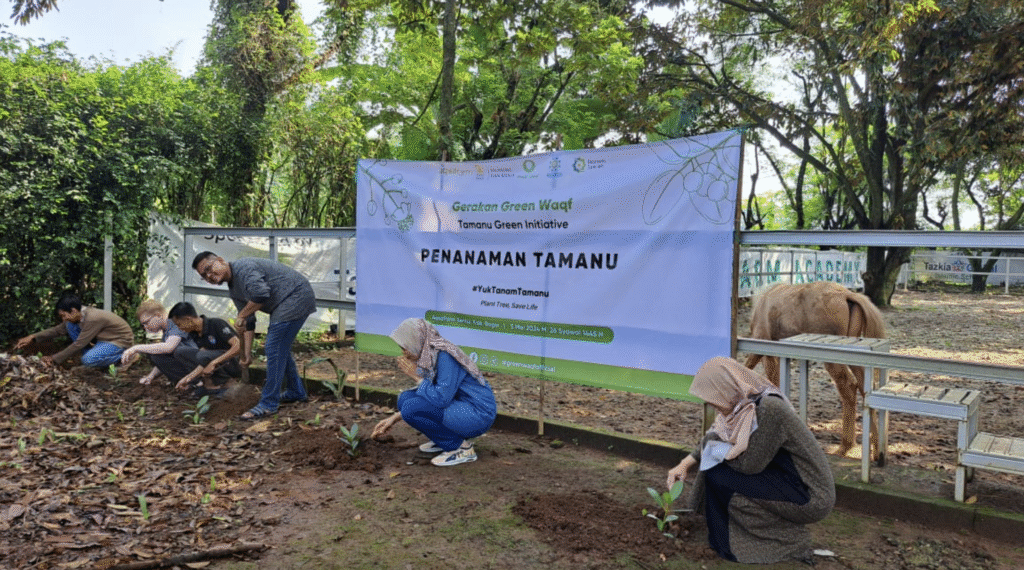
This essay has explores whether cooperative organization, combined with digital coordination, might offer one pathway for addressing fragmentation in local food systems.
Aqsa Farm and aqsafarmer are approached here not as solutions, but as sites through which these questions can be examined in practice. They provide a context for observing how coordination, governance, and participation might be organized differently, and under what conditions such arrangements might be sustained.
Whether these approaches can contribute to more resilient and equitable food systems remains uncertain. What appears more certain is that the challenges involved are not only technical, but deeply institutional and social. Any meaningful transformation will depend on how these dimensions are understood, negotiated, and continuously reworked over time.
About the author:
Iryandi (Dimas) Masputra is the founder at Aqsa Farm and a DBA student. Sentul, Babakan Madang, West Java, Indonesia