Second round of concurrent sessions
Format: Reverse Panel 8
Speakers: Sara Marcucci, Julian Tait, Yiyan Wang, Dan MacKinlay
AI is usually discussed as software. Sara Marcucci treats it as a supply chain that begins in mines and refineries, runs through chip factories, data centers, and model training, and ends as electronic waste. Drawing on the AI Supply Chain Impact Framework of the AI + Planetary Justice Alliance, she asks where power, value, and harm sit at each stage, and who carries the costs. Her starting point is the Global Majority, where much of the extraction and the dumping happen. She asks what it would take to reorganize this chain around collective ownership, ecological limits, and community control of data.
Julian Tait draws on eight years at Open Data Manchester, where communities moved from reading data about their neighborhoods to designing and collecting it themselves, from the Joy Diversion programme to Our Streets Chorlton and Right to the Streets. Each project ran into the same problem: governance. A proposed civic data cooperative for Greater Manchester never formed, and without a trustworthy institution to hold it, the most valuable data, held by people in vulnerable circumstances, went uncollected. Tait argues that a civic data cooperative is the first holder of data, not a counterweight to an existing one, and makes the case for multi-stakeholder models drawn from Italian and Québécois community and healthcare settings. He asks how such a body can bring in the institutions that act on the data when those are often the ones contributors trust least.
Yiyan Wang presents I2V-FOCAL, a framework that uses footage from existing roadside cameras to create realistic, editable 3D simulations of urban intersections. Rather than relying on safety assessments supplied by autonomous vehicle manufacturers, cities could use these publicly owned simulations to test vehicles against real local traffic conditions, independently investigate crashes, and share testing resources with other municipalities. The approach requires no additional cameras or expensive computing infrastructure. By placing simulation assets under public ownership, the project explores how cities can exercise greater control over autonomous vehicle deployment, shifting authority over safety assessments from private manufacturers to the communities and public institutions responsible for their streets.
Dan MacKinlay presents the Gradual Disempowerment program, which studies how step-by-step automation could erode human influence over the economy, the state, and culture. Most accounts of AI risk focus on sudden catastrophe or on the labor economics of automation. MacKinlay turns to the political and cultural dynamics. Economies, states, and cultures have served human interests largely because they depend on human participation. As AI replaces that participation, the dependence weakens, and the leverage people could use to correct one system is eroded by the others, since economic power buys policy and shapes opinion. The result could be a permanent loss of human influence.
Reporter 1: Dan MacKinlay
Reporter 2: Siddhi Gupta
Speakers
-

Yiyan Wang Researcher in 3D AI and Computer Graphics
-
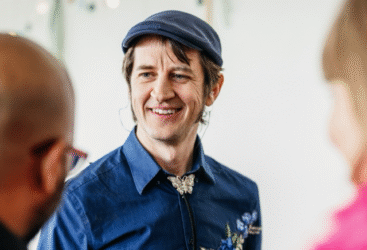
Dan MacKinlay Co-founder of the Alignment Journal / Researcher at ACS Research
-

Julian Tait Chief Executive Officer of Open Data Manchester
-

Sara Marcucci Founder and Director of the AI + Planetary Justice Alliance