First round of concurrent sessions
Format: Workshop
Speakers: Uygar Özesmi, James Farrar, Recep Erdem Cansızoğlu, Sandra Moreno
Bringing together the perspectives of the social and solidarity economy, emerging post-extractive economic models, and workers confronting algorithmic management, this workshop asks what it would take to build AI infrastructures governed by communities and workers rather than by extractive platforms. Participants will identify practical pathways, shared initiatives, and possible futures for community-owned and democratically governed AI.
Sandra Moreno Cadena brings the perspective of the global social and solidarity economy movement through RIPESS. She asks how community ownership, democratic governance, care, ecological transition, and territorially rooted networks can shape digital infrastructure and AI so that emerging economic alternatives do not simply reproduce extractive platform models.
Uygar Özesmi argues that as the dominant economic system weakens, new forms of economic organization are emerging around the world. But these alternatives can still depend on AI systems controlled by a small number of powerful companies. He asks how these “next economies” can avoid extraction and build community-owned AI instead, while connecting the discussion to preparations for the Next Economies Forum at Heliopolis University in Cairo in 2027.
Recep Erdem Cansızoğlu brings a focus on democratic economic models, cooperative production, and the social dimensions of technological change. As a researcher and organizer with the Prosumer Economy Society and Co-Lead of the Next Economies Forum, he asks how solidarity-economy networks can translate principles of participation and equity into concrete institutions for digital transformation and community-governed AI. His contribution also connects the Bangkok discussion to the longer-term work of the Next Economies Forum.
James Farrar brings the perspective of workers confronting algorithmic management, surveillance, and opaque automated decision-making in the platform economy. Drawing on the work of Worker Info Exchange, he asks what a solidarity economy for AI would require in terms of worker access to data, collective power over algorithms, and meaningful rights to challenge or refuse automated management.
Reporter 1: Recep Erdem Cansızoğlu
Reporter 2:
Speakers
-

Recep Erdem Cansızoğlu Co-Lead Next Economies Forum
-

James Farrar Founder and Director of Worker Info Exchange (WIE)
-

Sandra Moreno Cadena Executive Secretary of RIPESS
-
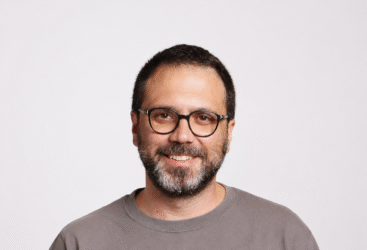
Uygar Özesmi Founder & Instigator of Good4Trust.org