Work Shouldn’t Be a Dictatorship
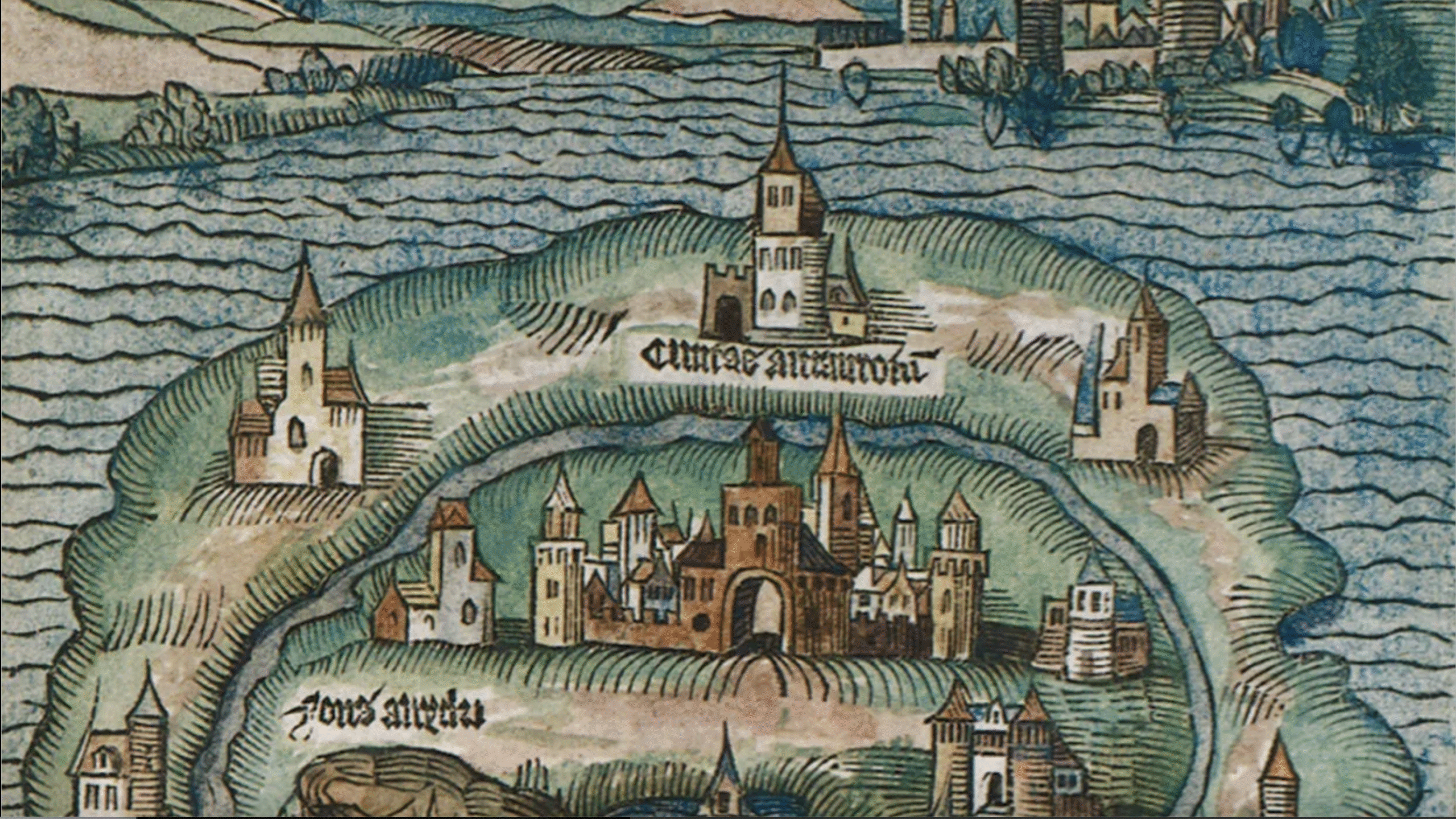
Image credit: Illustration from Utopia by Thomas More. Image in the public domain; reproduced under Creative Commons Attribution–NonCommercial–ShareAlike (CC BY-NC-SA).
How to design a cooperative incubator in Copenhagen in ways that strengthen the broader ecosystem.
I’ve been fascinated with the way we do “work” in modern societies for a long time. We live in societies that claim to worship democracy, yet most of us spend the majority of our waking lives inside institutions that are, by design, autocratic.
A company is essentially a dictatorship. The shareholders never asked you whether you agreed with how the profits of your labor would be distributed or what you think of the business. And somehow, most of us seem to be fine with that —or at least, we’ve been convinced there’s no alternative.
So why do those institutions exist the way they do? And more importantly: if so much of the labor that we build our lives and identities around is either pointless or actively harmful, why don’t we do something about it?
I’m Melike, and being quite the generalist, I’ve dabbled in many things but to keep it relevant, let it suffice to say that I’m a sociologist, anthropologist, designer — and dare I say writer? — interested in economics, organizations, work, and technology, which I engage with as a scholar activist from an ecofeminist perspective.
I am also a relatively privileged woman from the Global Majority who has spent about half of her life living in North America and Northern Europe, and here I have been a victim of several shitty jobs before I got to my current one.
In those darker times, I have found joy and meaning mostly in my unpaid labor. Call me a romantic, but I truly believe that my whole life —the good, the bad and the ugly— has prepared and led me to the project I am working on today.
I’m currently doing my Ph.D. at Aalborg University in Copenhagen as part of the Responsible Technology Futures Research Group. My project is embedded in the EU MSCA Reworlding Network, in which we explore participatory design capabilities that are inclusive of marginalized human and more-than-human voices, in order to build a pluriverse of more just and regenerative worlds.
The Problem of Work
My research begins with the problem of work —which is a problem specifically in the form of waged labor in extractive capitalist economies. Or shall I say problems of work? There are so many.
Nowadays, work is what modern life revolves around. Unless you’re filthy rich, you’ll probably spend more of your waking life working than doing anything else. You base your identity on your work, and judge others by theirs. For most of us, our reason to wake up, our purpose, the thing we have put the most effort into will be our work. The more money you make, the more prestigious your job seems to be, regardless of the
consequences of your work on the world.
This glorification of work makes invisible the political aspect of it —the fact that it demands your time, your body, your attention, and shapes your desires, all to make some guy at the top richer. That guy is most likely white, male, already rich, and doesn’t give a damn about you.
How many people are working their dream job and go in every day with genuine passion? Actually, scratch that — how many people even like their job? How many feel that they can be themselves at work? How many would still work the way they do if they didn’t have to, just to survive? How many feel dead inside because of their job? How many, despite working, can live comfortably without suffering from financial anxiety for their future and their loved ones? Even in countries where labor conditions are better and the welfare state is stronger, most jobs sit somewhere on a spectrum from boring to soul-crushing. And how many people can say no to that and choose to work towards their passion or purpose without being punished for it? Because it seems that being unemployed is the only thing worse than being employed —severe financial insecurity and social exclusion. And I could go on a whole other rant about what work does to our wellbeing. It certainly doesn’t do much for the planet’s wellbeing either.
So what does this work that we spend so much time and energy performing actually do? What is the point? As the late anthropologist David Graeber pointed out, an overwhelming amount of well-paid labor is completely meaningless —the world would be no different if those jobs simply didn’t exist. But what’s worse is that an alarming amount of paid labor actively harms our environment and the people within it. And we’re in trouble —the damage we’ve done while doing our jobs is catastrophic, and it’s going to take a lot of work to fix it. So why don’t we just get better jobs that fix our collective problems? Well, that kind of labor is either non-existent or not valued, and therefore not well-paid —or not paid at all.
Care labor for people and the planet is usually voluntary and not even considered work. Meanwhile, the solarpunk utopian dreams of technology liberating us from toil and trouble seem further away than ever. Drowned out by surveillance capitalism, algorithmic management, and a tech industry that moves fast, breaks things, and sends the bill to the rest of us.
A Dictatorship by Any Other Name
I was not raised on leftist politics. I was born into a rather conservative family that taught me to be kind to others, share whatever I have, and to do my best to be there for people who have harder lives than I do.
My early social responsibility endeavors felt like they were only scratching the surface of a much deeper problem. So I set out on a quest to understand why this world is so unfair, following the powerful emotion of rage, which often illuminates injustices and gives us the power to do something about them. And throughout that quest, I became increasingly convinced that there is something terribly wrong with the way we organize our economies and our work institutions —which I see, essentially, as our vehicles of collective action.
And I solemnly believe that there is another way. A pluriverse of ways, in fact, to organize that are not based on relations of domination but on relations of care.
So the way I see it, our core problem is that we live in hypocritical societies in which we supposedly value democracy above all, but the institutions in which we spend most of our waking lives are incredibly autocratic. A company is essentially a dictatorship, and somehow most of us seem to be fine with that. It becomes incredibly difficult to implement any change when we, the workers, have no decision-making power in organizations that were designed for the endless growth of shareholder profits at the cost of literally everything else. The planet, the people, our wellbeing, our precious time, and our capacity to find meaning and wonder in being alive.
Reworlding Work
The purpose of my project is to understand the conditions necessary for cooperatives to emerge and thrive in Copenhagen, and to build those conditions with the people who need them. We’ve named the intended outcome the Future Jobs Lab for now –something like a cooperative incubator, though we’ll ultimately define it along the way. Ambitious, huh?
In research terms, the driving question is:
How can a Future Jobs Lab be designed to enable the emergence of cooperatives in Denmark that provide non-exploitative, secure, and meaningful livelihoods to people at risk of precarious employment, while fostering regenerative relationships with local communities and the planet? And how can we design technologies to support such businesses?
To explore these questions, I’ve developed a slightly chaotic but intuitive method that pushes the boundaries of traditional academia, combining ethnographic methods, participatory design, and action research within the framework of four reworlding capabilities: retracing, reconnecting, reimagining, and reinstitutioning.
Let me walk you through where I am with each.
Retracing
Retracing refers to the surfacing of alternative ways of doing and knowing, and recovering the traces of worlds that have been obscured or ignored. As a foreign researcher in Denmark with anthropological training, my initial instinct is to meet people, hang out with them, ask questions, and listen to what they have to say. Which is basically an ethnography. So I’m in the process of tracing the actors in the cooperative ecosystem in order to understand what already exists, where the gaps, barriers, and opportunities lie, and who we can work with.
My adventure began in October 2025, when I started collaborating with the Danish Research Institute for Democratic Businesses as a lead author on a policy report commissioned by the Danish Business Authority. On January 1st 2026, the Danish Government passed legislation meant to incentivize worker buyouts as a viable succession option, in the face of a generational wave of business owner retirements expected over the coming decade. The policy was inspired by the Employee Ownership Trust (EOT) legislation that proved highly successful in increasing employee-owned businesses in the UK, and we were asked to figure out what made that implementation work so well. After a field trip and many interviews, we published a preliminary report, to be developed and finalized this summer.
In the meantime, my colleagues have been helping me understand the cooperative history and ecosystem in Denmark and introducing me to key actors. We’ve compiled a list of organizations and people that spans the cooperative ecosystem but also encompasses parts of the broader entrepreneurship ecosystem. If the goal is to make cooperative entrepreneurship more mainstream, we need to understand what happens when someone without a prior interest in cooperativism decides to start a business. Who do they talk to? What options do they think they have? What support do they get? Do they ever even learn that building their business as a cooperative is a viable option?
So far I’ve conducted 22 interviews, with more to come. My interviewees include worker-, producer-, and consumer-owned cooperatives and platform cooperatives (among them one that started with high hopes and ultimately failed, with many lessons to offer), advocates and academics from the Danish cooperative movement, business coaches in universities and public employment services, an existing cooperative incubator, and trade union representatives. The process is a bit messy, I’m following my leads and my curiosity which are taking me all over the place. But this well-connected ecosystem is distributed throughout the city, and I figure that’s what the situation calls for.
I will publish an article on what I’ve learned, and I also intend to collaboratively map this ecosystem with some of the people I’ve met to visualize the actors, the relationships between them, and the flows of influence, knowledge, and money. I’m hoping this map will prove useful to anyone wanting to build something in the ecosystem, and that it will inform the future phases of the project.
Alongside this, I’m listening to people who are experiencing unemployment or precarious work conditions, to understand their experience of the labor market in Denmark and their problems, aspirations, and needs. This is crucial, because we want to build solutions with and for the people who need them, and the people within the cooperative and entrepreneurship ecosystems are not the ones who are marginalized in the labor market.
Reconnecting
My explorations so far have shown me what, in hindsight, seems obvious: we are not the only geniuses who have had the brilliant idea to build a social solidarity economy incubator in Denmark. There are several people that want to create a hub capable of birthing better businesses. We have slightly different definitions of “better,” or are focused on slightly different aspects of this enormous ambition, but that only makes us stronger if we can unite. Luckily, reconnecting is at the core of my project: bringing together people from varying backgrounds but with common interests, to work effectively towards a shared goal. And it seems that’s exactly where the project is leading me.
For this phase, I will use Participatory Action Research (PAR), a meta-methodology that shapes the principles with which you conduct research rather than dictating specific methods.
What matters in a PAR project is that it is conducted with a community of people experiencing a particular problem (the action group), in which the researcher acts as a facilitator who empowers the group to develop solutions on their own terms, rather than arriving as an expert with a preconceived answer.
In practice, that means I have a sense of what I’d like to facilitate, but I cannot control the outcomes, they will emerge from the process. Together, we will produce knowledge through a cyclical process that includes workshops on how to work together, co-defining the problem statement, envisioning a utopian horizon, planning, acting, and reflecting.
Reimagining
Reimagining refers to collaboratively envisioning and redesigning socio-environmental and technical infrastructures around values beyond the status quo. One thing that has already emerged from my research is that there are very rigid narratives around what work, entrepreneurship, and business should be. I’m interested in disrupting those narratives and reimagining what these things could look and feel like.
For this, I will use a speculative design fiction methodology in which we co-author a Futures of Work Anthology with participants from the cooperative ecosystem and the action group. I will facilitate a summer course in creative writing and speculative fiction in which we explore utopian fiction, and participants will contribute a short piece depicting life and work in a cooperative economy. The anthology will be published and shared through a storytelling event around a bonfire.
Reinstitutioning
Reinstitutioning means embedding reworlding efforts into institutions and policies by negotiating new arenas for collective action between grassroots initiatives and established institutions. In my project, this will take shape through educational initiatives in which we work with university incubators and other business hubs to train coaches on cooperative entrepreneurship. And of course, the design and building of the Future Jobs Lab is itself an act of reinstitutioning.
So What?
Our economic systems have always been closely entangled with the technologies of their time. The printing press, the steam engine, the assembly line, the algorithm —each promised liberation and delivered, alongside genuine gains, new and more sophisticated forms of extraction. The machines we use shape us, yes, but we need to remember that we make the machines. And in that fact lies both a responsibility and an opening.
Participatory design has known this since its beginnings. The UTOPIA project in 1970s Scandinavia was a landmark attempt to involve workers in the design of the tools that would reshape their working lives. It was a radical proposition: that the people most affected by a technology should have a say in how it is built.
That spirit feels more urgent than ever in an era of platform capitalism, where digital infrastructures have become the new factory floor, and where the workers who animate those platforms often have no voice in how they operate and no protection from cutthroat capitalism.
My research picks up that thread and tries to pull it forward into the present moment. We don’t just want to engage workers in the design of workplace technologies —we want to use technology to build workplaces that are cooperative by design. Not tools that optimize extraction, but tools that enable shared ownership, democratic decision-making, and care —for people and for the planet.
And Copenhagen is a wonderful setting for this project. Not only does Denmark have a cooperative legacy (semi-forgotten but still alive), but there is also a strong tradition of participatory design and action research, and a government that seems to listen to its citizens more than most.
Help!
Now, I could definitely use some help with this. On a practical level, any input and experience regarding cooperative incubators and ecosystems would be incredibly useful as there’s no need to reinvent the wheel. On a more academic note, my research process is a touch chaotic and deliberately deviates from conventional social scientific norms, but if you have suggestions for literature that could benefit the work or help me position it within formal academic conversations, I’m all ears. And if this project interests you and you have another idea about how you might contribute, please don’t hesitate to reach out. You are more than welcome.
“Another world is not only possible, she is on her way. On a quiet day, I can hear her breathing.”
— Arundhati Roy
About the author:
Melike Kaplan is a 2026/2027 ICDE Fellow and a Marie Skłodowska-Curie PhD Fellow at Aalborg University