India Launches Bharat Taxi, A National Platform Co-op
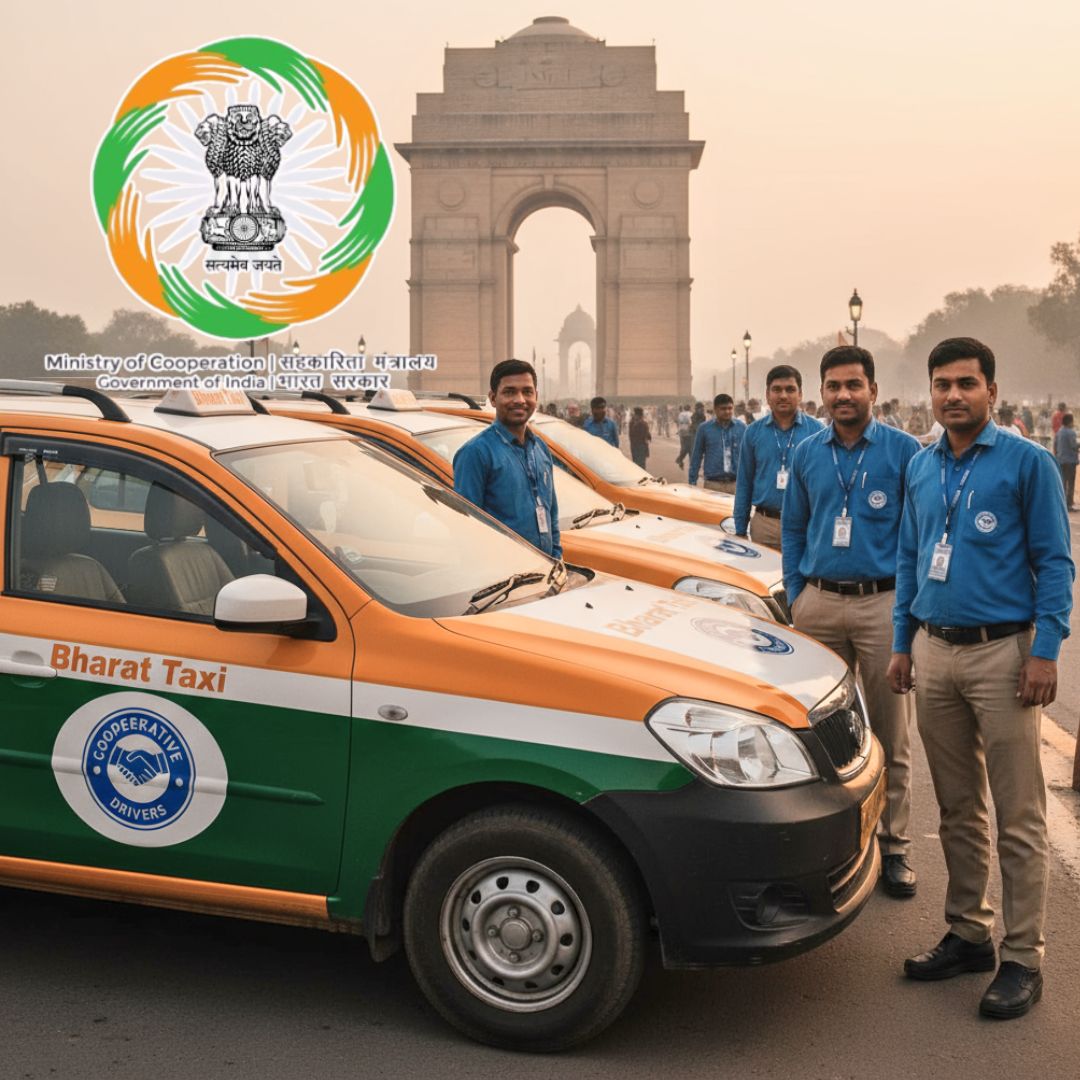
India is preparing to launch Bharat Taxi, a government-backed, cooperative ride-hailing platform designed to free commercial drivers from the high commissions charged by private aggregators. Cooperation Minister Amit Shah announced in Parliament on Tuesday that the digital service, which will be run by the newly registered Sahakar Taxi Cooperative Ltd, will begin full national operations in January 2026, following beta trials in Delhi and Gujarat.
Bharat Taxi represents one of India’s most ambitious experiments in platform cooperativism. While companies like Ola, Uber, and Rapido routinely charge drivers 20–30% commission, Bharat Taxi will operate on a zero-commission model. Drivers keep the full fare and instead pay a small membership fee, daily, weekly, or monthly, to sustain the platform.
The cooperative launched its soft rollout on November 10, initially through Delhi Traffic Police’s prepaid taxi booths at Delhi International Airport. The driver-facing app went live in Delhi on November 13 and in Rajkot, Gujarat, on November 26. According to Shah’s statement to the Lok Sabha, the platform initially registered over 37,000 drivers. That number has now grown past 51,000 across cars, autos, and bikes in New Delhi and Saurashtra, with ambitions to reach 5,000 more drivers by year-end and 100,000 nationwide by 2030.
Bharat Taxi is backed by eight major cooperative institutions, including the National Cooperative Development Corporation, Amul (Gujarat Cooperative Milk Marketing Federation), NABARD, IFFCO, and the National Dairy Development Board. Amul’s Managing Director, Jayen Mehta, serves as chairman.
The platform promises transparent fares, no surge pricing, multilingual interfaces, real-time vehicle tracking, 24/7 customer support, and integration with Delhi Metro for seamless last-mile connectivity. A formal partnership with Delhi Police aims to strengthen safety standards for both drivers and riders.
As India debates the future of work in the gig economy, Bharat Taxi emerges as a significant test case: can a cooperative, zero-commission model scale nationally and compete with entrenched ride-hailing giants? With government backing, major cooperative institutions behind it, and tens of thousands of drivers already enrolled, the experiment has begun.