Call for Researchers and Practitioners
Solidarity AI 2026
November 12–15, 2026
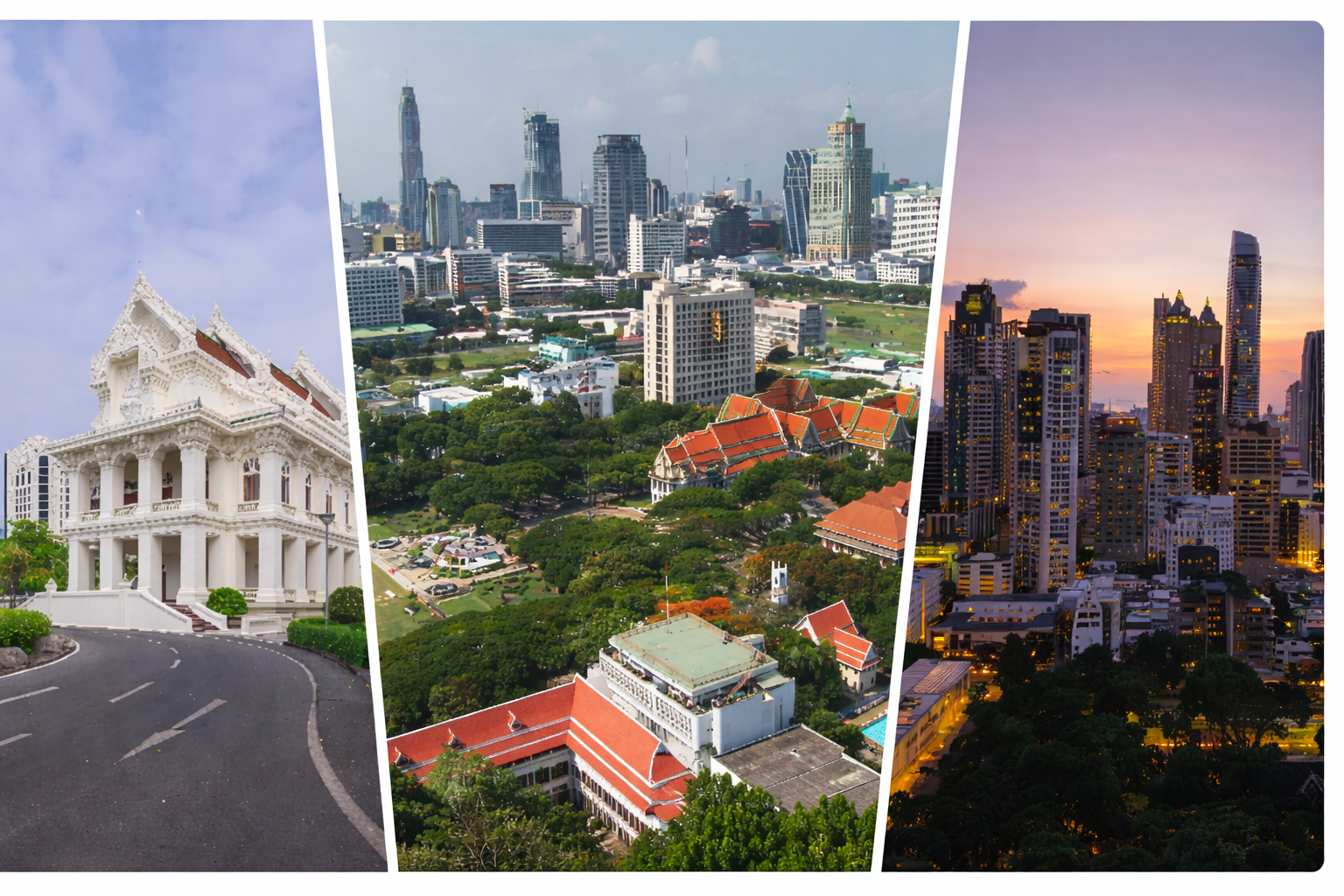
Chulalongkorn University | Bangkok, Thailand
For inquiries:
pcc@newschool.edu
Conference website and registration/updates
AI With, By, and For Communities
Building Solidarity Stacks
What would it mean to design artificial intelligence in service of climate justice, communal care, and local values?
The 2026 Solidarity AI conference, hosted at Chulalongkorn University in Bangkok and co-convened by PCC Global and PCC Thailand with regional partners, brings together movement builders, researchers, cooperative and credit union leaders, technologists, policymakers, union organizers, and digital rights advocates to confront this question together.
Following the 2025 Cooperative AI conference in Istanbul—which explored how collective ownership and democratic governance might reshape not only the use of AI but its underlying infrastructures—this year’s gathering turns the conversation toward Asia and the Majority World, helping to decenter AI debates historically shaped by a narrow set of geopolitical power centers.
Across many regions, digital systems increasingly determine who is paid, tracked, replaced, or rendered invisible. Decisions about data, infrastructure, and algorithmic systems are often made far from the communities whose lives they shape.
Solidarity AI names a choice: whether AI will be governed by distant systems of power or shaped by the communities who live with its consequences.
This conference focuses on how to build technologies with, by, and for the communities they affect, ensuring that those who build, maintain, and are governed by AI systems meaningfully participate in shaping them—from the extraction of raw materials to the design of algorithms and the governance of digital infrastructures.
Conference website
This conference moves beyond abstract policy debates and speculative techno-optimism without rejecting technology itself. Instead, it works in the space between uncritical embrace and reflexive refusal, remaining rigorous about power, attentive to risk, and committed to shaping technological systems toward democratic, ecological, and communal ends.
We move beyond critique toward construction, seeking deployable models, governance experiments, federation strategies, and real-world coordination that can be implemented and scaled.
Here, research is valued for its public service, civic contribution, durable partnerships, and reduction of inequality, and by whether it materially strengthens the common good.

Building Solidarity Stacks
Today’s dominant AI systems operate as vertically integrated extraction architectures, where cloud infrastructure, datasets, models, applications, and finance reinforce one another to concentrate power and value upward while distributing risk downward.
Solidarity AI explores an alternative: solidarity stacks.
Solidarity stacks are interconnected layers of technology, governance, and labor systems that are collectively owned, locally governed, and designed to serve social rather than extractive ends. These systems link cooperative cloud infrastructures, data trusts and commons, democratically governed AI models, platform cooperatives, and federated financial institutions into durable ecosystems that support shared prosperity. Such systems raise key regulatory questions about how laws, public policy, and governance models can support cooperative and community-based innovation, including global cooperatives incorporated in the Majority World.
This vision is already taking shape in multiple contexts—from farmer-led data cooperatives in India and Vietnam’s national AI stack to multilingual AI systems in Indonesia and Malaysia, worker organizing in the platform economies of the Philippines, and platform cooperatives in Spain.
In Thailand, initiatives such as TechTransThai, a community-driven technology project supporting transgender communities through free software, decentralized data tools, and public-interest digital infrastructure, offer additional examples.
Each case illustrates how communities can reclaim technological and economic infrastructures in ways that strengthen autonomy, equity, and care.

Why Bangkok? Why Now?
Bangkok is not a backdrop; it is a site of living intellectual and political traditions that reframe technology through responsibility, sufficiency, and collective autonomy.
Solidarity AI 2026 draws on traditions that have long resisted extractive techno-solutionism. Buddhist ethics foreground interdependence and care. Thailand’s sufficiency economy challenges growth at all costs. Gandhian decentralism and Ambedkarite critique insist on justice and structural transformation.
This conference welcomes scholarship and practice grounded in lived experience and embedded knowledge, with a strong focus on research and real-world experimentation in platform cooperatives and adjacent solidarity enterprises.
We are especially interested in contributions that:
- Emerge from and remain accountable to communities affected by AI systems
- Examine AI’s material supply chains, from minerals and energy to data labeling and content moderation
- Connect cooperative principles to implementable digital infrastructure
- Move beyond critique toward deployable, federated models
While the INDL 2026 conference in Geneva calls for rigorous interdisciplinary work on “AI Supply Chains,” highlighting invisible labor and ethical sourcing embedded in AI systems, Solidarity AI 2026 extends that conversation by asking: How can AI supply chains themselves become democratically governed, federated, and solidarity-based?
Conference Themes
We encourage submissions that bridge research and practice and that operate across layers of the Solidarity Stack.
1. AI Supply Chains, Funding, and Labor
- Mapping AI supply chains from raw materials to the cloud
- Data annotators, moderators, and other forms of invisible labor
- Social dialogue, collective bargaining, and union–cooperative alliances in AI work
- Creation of ecosystems of open-source AI models
- Gendered, queer, and migrant labor in AI supply chains
- Content moderation trauma, care infrastructures, and algorithmic wage gaps
- Securing patient capital with genuinely social interests
2. Cooperative Cloud, Data, and Model Governance
- Cooperative, municipal, or public data centers and data cooperatives
- Digital commons governance frameworks and democratic governance primitives
- Queer data governance and challenges of biometric misrecognition
- Interoperability and federation across regions
- Intersectional auditing and safeguards for equitable AI systems
3. AI and Ecological Limits
- AI’s energy, water, and land footprint
- Community responses to hyperscale data centers and extractive mining
- Renewable, cooperative, and public–cooperative data center models
- Care-centered, sufficiency-oriented approaches to AI design
- Democratic safeguards and inclusive governance in AI infrastructures
4. Linguistic Justice and Majority World AI
- Regionally grounded large language models and public-interest AI
- Protection of linguistic diversity and minority dialects
- Addressing algorithmic bias against LGBTQIA+ and marginalized communities
- Dataset governance that protects vulnerable communities
- Cooperative AI infrastructures serving minority languages
5. Digital Public Infrastructure and Cooperative Alternatives
- Digital Public Infrastructure as enabling layer or surveillance risk
- Cooperative alternatives within Digital Public Infrastructure (e.g., platform co-ops)
- Cooperative identity systems and payment rails
- Public–cooperative hybrids
- Case studies from Asia and beyond
6. Scaling Through Federation
- Sixth Cooperative Principle (“cooperation among cooperatives”)
- Cross-border cooperative AI alliances
- Surplus rerouting across layers
- Practical federation toolkits
- Encourage global partnerships among governments, research centers, and solidarity organizations to counter AI nationalism
7. Refusal & Limits
- Democratic AI requires not only participation, but the power to say no
- Labor precarity intensified
- Deployment without meaningful community consultation
- Environmental burden imposed locally
8. Law, Regulation, and Cooperative Governance of AI
- Designing regulatory frameworks that support innovation while limiting excessive market concentration and speculation in AI economies
- Policy frameworks enabling solidarity-based AI ecosystems
- Include practitioners managing public-cooperative infrastructure alongside policymakers and researchers
- Policy that encourage research approaches that reduce reliance on proprietary AI models, datasets, and platforms
- Comparative approaches to AI regulation across regions
- International agreements and multilateral governance for democratic AI governance
Formats
We welcome contributions across multiple formats, including:
- Exhibitions imagining liberatory AI futures in Thailand and beyond
- Academic papers presenting research on solidarity AI systems
- Case studies and field reports from real-world initiatives
- Participatory poetry session on conference themes, featuring Thai/Asian poems and participant readings in Thai or English.
- Workshops and strategy sessions for practitioners and organizers
- Artistic interventions and performance-based lectures
- Technology demonstrations of cooperative AI tools and systems
- Policy blueprints for democratic AI governance
- Movement-building frameworks for solidarity AI ecosystems
Submission Guidelines
Submissions should:
- Clearly relate to one or more conference themes
- Include a 200–400 word abstract
- Indicate whether you are submitting as a researcher, practitioner, or hybrid
- Include relevant references, data, or implementation examples (where applicable)
- Specify format (paper, workshop, demo, artistic intervention, etc.)
- State whether or not you’d like to be considered for the Du Bois prize.
Submission deadline: April 30, 2026
Notification of acceptance: May 15, 2026
Full materials due: September 15, 2026
Submit HERE
W.E.B. Du Bois Prize for Emerging Scholars
A $500 prize will be awarded to an early scholar (under 35) whose submission demonstrates methodological rigor, innovation, and commitment to marginalized communities in the design of AI systems.
For inquiries:
pcc@newschool.edu
Conference website and registration/updates
Bangkok, November 12–15, 2026.